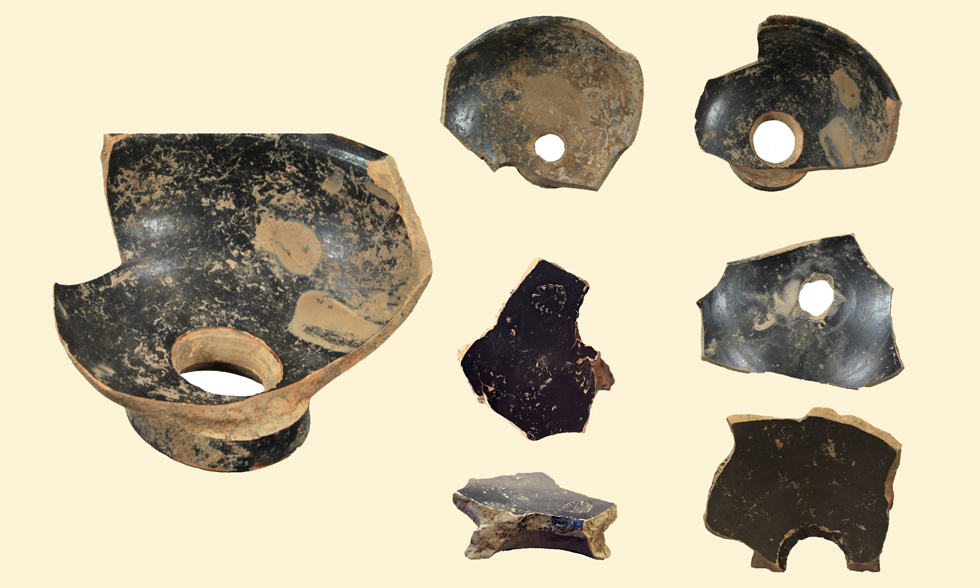
Copertina

Veduta aerea dell’area archeologica di Gabii (RM) (volo Gabii Project)
Sommario
M. FABBRI, R. BOCHICCHIO – Nuove considerazioni sulle mura di Gabii (RM) (pp. 27-52)

Veduta aerea dell’area archeologica di Gabii (RM) (volo Gabii Project)
M. FABBRI, R. BOCHICCHIO – Nuove considerazioni sulle mura di Gabii (RM) (pp. 27-52)
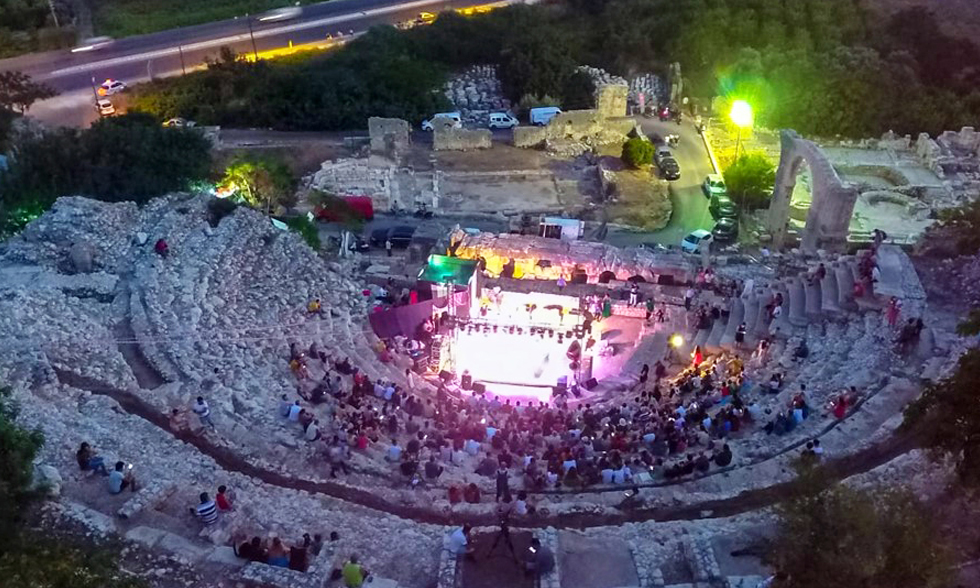
Il teatro di Elaiussa Sebaste (Ayaş, Turchia) durante uno degli spettacoli dell’Ayaş Antique Theater Festival organizzato dal Comune di Erdemli, agosto 2018 (foto Archivio Erdemli Belediyesi)
A. FALCONE – Premessa (pp. 7-11)
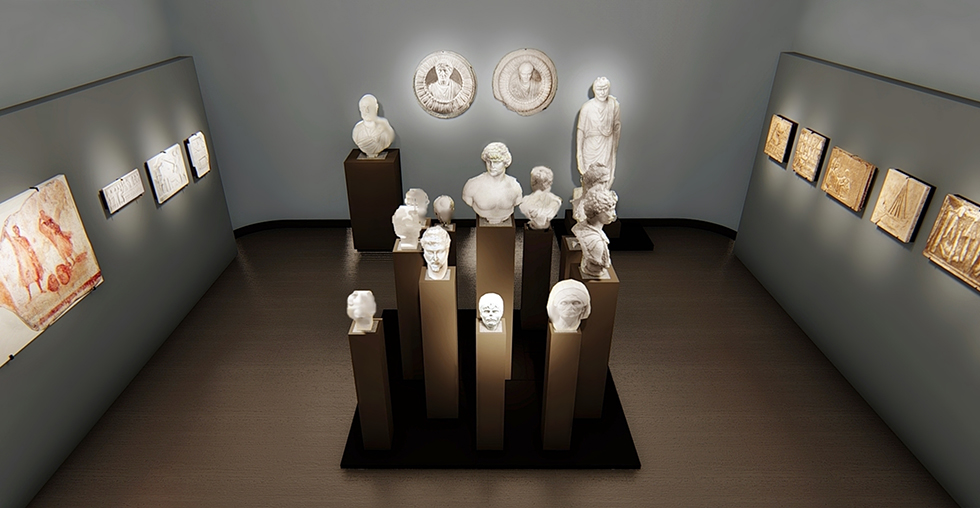
Museo Ostiense, render della sala VII – La gente (Studio Balletti&Sabbatini)
M. OSANNA – Prefazione (pp. 9-10)
M. BARBERA – Introduzione generale (pp. 11-20)
P. OLIVANTI – L’edificio museale: sintesi della storia e degli allestimenti (pp. 21-31)
Prima parte: il progetto scientifico
P. GERMONI – Il percorso museale (pp. 33-34)
F. MARINI RECCHIA – Sezione seconda (sale III-IV). Le origini e l’età repubblicana (pp. 37-42)
F. MARINI RECCHIA, C. VALERI – Sezione terza (sale V-VI-VII). La città (pp. 43-52)
C. GENOVESE – Sezione quarta (sala VIII). Le religioni e i culti (pp. 53-58)
P. GERMONI – Sezione quinta (sale IX-X-XI). Le necropoli (pp. 59- 65)
A. DOCCI, T. SORGONI – Il restauro delle opere del nuovo Museo Ostiense (pp. 75-82)
Seconda parte: il progetto tecnico
V. CASELLA – L’edificio museale e l’impostazione della progettazione (pp. 83-87)
A. BALLETTI, A. SABBATINI – Architettura e allestimento (pp. 89-95)
F. MAIZZA – Il miglioramento sismico (pp. 97-99)
L. VERRECCHIA – Il nuovo sistema impiantistico (pp. 101-103)
C. DE CAMILLIS, R. FIBBI – L’illuminazione delle sale (pp. 105-107)
F. PIERDOMINICI, V. IANNILLI – La sicurezza (pp. 109-111)
A. D’ALESSIO – Postfazione (pp. 113-115)
The agricultural colonization of the Pomptinae Paludes: surveys in the lower Pontine plain
Le centuriazioni della Valle Umbra da Spoleto a Perugia
Per una definizione di paesaggio in epoca classica: i testi
Giardino e villa in epoca tardo-repubblicana ed imperiale
What do we know about the Roman presence in Beheira (Western Delta-Egypt)? (First Glance)
Measuring Urbanisation in the Late Republican and Early Imperial Landscape of Adriatic Central Italy
City and Sanctuary in Hellenistic Asia Minor. Sacred and Ideological Landscapes
Urbanistica delle città romane di Corsica: l’esempio di Mariana
Attività dell’ Università degli studi di Macerata ad Hadrianopolis (Albania)
The Network of Subject Co-Popularity in Classical Archaeology
Geoarchaeological Research in the Roman Town of Ammaia (Alentejo, Portugal)
Valorizzazione del sito archeologico di Doclea, città romana in Montenegro
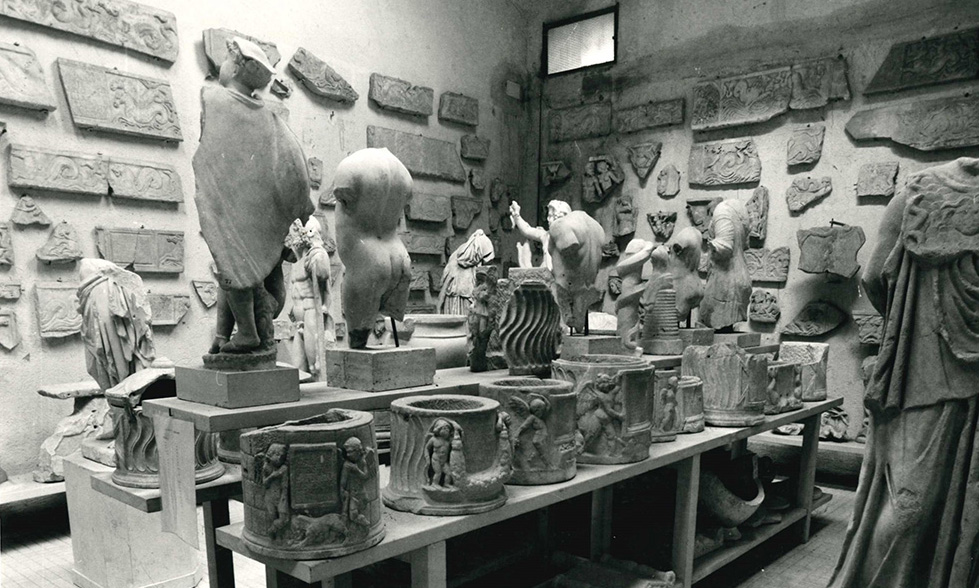 Ostia (RM). Vecchio Antiquarium Ostiense, sala V (Archivio Fotografico del Parco archeologico di Ostia antica)
Atti della Giornata di Studi, organizzata da Dario Daffara
Parco archeologico di Ostia antica, 26 novembre 2019
M. BARBERA – Prefazione agli Atti della Giornata di Studi in ricordo di Raissa Calza (pp. 53-55)
P. OLIVANTI – Una vita in movimento (pp. 55-76)
E.J. SHEPHERD – Raissa Calza e Marguerite Yourcenar, «en regardant un de ces portraits» (pp. 77-100)
M. LO BLUNDO – Il Fondo Calza nell’Archivio Fotografico di Ostia antica (pp. 101-118)
D. DAFFARA – Tra le carte di Raissa: nota sulla produzione scientifica (pp. 145-169)
Tra gli aspetti più rilevanti del Congresso sono da evidenziare due serate-evento organizzate dagli Istituti stranieri della Capitale, che si occupano di archeologia a Roma, in cui sono state esposte le sessioni relative ai posters. Ogni Istituto ha trattato uno o due temi specifici, e tutti i posters, in totale 211, sono stati esposti nelle due serate organizzate una al Gianicolo, dall’Accademia Americana, dall’Istituto Norvegese, dall’Istituto Finlandese e dall’Accademia Reale di Spagna e l’altra a Valle Giulia, dall’Accademia di Romania, dalla British School, dall’Accademia di Danimarca e dal Reale Istituto Nederlandese. I due eventi sono stati motivo di confronto e di conoscenza delle Accademie che svolgono un ruolo determinante nell’Associazione Internazionale di Archeologia Classica e nella storia dell’archeologia italiana. Una parte dei posters che riguardano l’archeologia italiana (consultabili anche sul Bollettino di Archeologia on-line) sono stati pubblicati su Fasti On Line Documenti & Ricerca (FOLD&R).
One of the great pleasures of the conference was the two evenings organized by the foreign institutes in Rome, who divided between them the poster sessions. Each took on one or two particular themes, and all of the posters – 211 in all – could be seen on one of those two evenings, one spent on the Gianicolo (at the American Academy in Rome, Det Norske Institutt i Roma, the Istitutum Romanum Finlandiae, the Real Academia de España en Roma) and the other at Valle Giulia (at the Academia Belgica, the Academia di Romania in Roma, the British School at Rome, Det Danske Institut i Rom, and the Koninklijk Nederlands Instituut Rome). These evenings also gave us a chance to gather and chat with the other congressisti and to admire the marvellous institutions which play such a major role in the history and archaeology of Italy. In the event, less than half of the 211 posters were eventually submitted as articles. Of these, 35 were published in FastiOn Line Documenti&Ricerca (FOLD&R) as they related to Italian excavations. The others are now published in BAO.
Elizabeth Fentress
1. Town planning – Urbanistica
2. Architecture – Architettura
3. Death and Religion in Classical Antiquity- Aspetti Cultuali e Funerari nell’Antichità Classica
4. Urban Centres – Centri Urbani
6. Vesuvian Cities – Città Vesuviane
7. Material Culture and Ancient Technology – Cultura Materiale e Tecnologia Antica
9. Ports, trade and amphorae – Porti, commercio e anfore